
Criminal Court Records in Benton County
A criminal court record is the case file the clerk opens the moment formal charges are filed. It is not the arrest report and it is not a jail log. It is the running history of one prosecution. The file collects the charging document, bond papers, the plea, every motion, each order, and the judgment. The clerk of court keeps and certifies this record. In Benton County, felony case files are held by the Circuit Clerk, who serves as the custodian for all Circuit Court proceedings.
Two court levels produce criminal court records here. The Circuit Court is the trial court for felonies, the most serious crimes. The Justice Court and the municipal courts handle misdemeanors, traffic offenses, and ordinance cases. A felony usually starts with an arrest and a lower-court appearance, then moves to Circuit Court after a grand jury indictment or a filed information. For a closer look at the charges themselves, see the Benton County court charge records, and for every record type the courts keep, the broader Benton County court records page maps the full system.
How to Search Benton County Criminal Court Records
Circuit Court criminal files are searched through Mississippi Electronic Courts. The MEC system lists the Circuit Court of Benton County, which went live for electronic filing on February 10, 2025. Remote viewing runs through PAMEC, the public access side of the system. Registration carries an annual user fee of about ten dollars plus a per-page viewing charge.
- Open the MEC portal and locate the Circuit Court of Benton County in the court list.
- Register for a PAMEC account if you need remote public access to documents.
- Search by defendant name or by case number where the system allows it.
- Narrow results by court, case type, and filing date to find the right file.
- Open the case to read the docket, the disposition, and the sentencing order.
Not every file is online. Older cases, sealed matters, and certified copies route to the Circuit Clerk at 662-224-6310. The Third Circuit court information page on MEC confirms Benton County's place in the district. Mississippi has no single public statewide criminal-history search for the general public, so the clerk counter remains the route for files that have not been digitized.
Stages of a Benton County Criminal Case
A criminal case moves through set stages, and each one leaves a mark in the record. The docket lists every step in order, so a reader can trace the case from the first filing to the last order. Knowing the stages makes the file far easier to read.
Case flow: Charges Filed › Arraignment › Pretrial / Motions › Plea or Trial › Disposition › Sentencing
| Stage | What Happens |
|---|---|
| Arraignment | The defendant is told the charge and enters a plea of guilty, not guilty, or no contest where allowed. |
| Pretrial / Motions | Lawyers file motions, set bond, request continuances, and exchange evidence before any trial. |
| Plea or Trial | The case ends in a plea agreement or proceeds to a jury or bench trial for a verdict. |
| Sentencing | The judge orders the penalty, which can include prison, probation, fines, restitution, and court costs. |
Continuances, dismissed counts, and appeals also appear along the way. A felony that began in the lower court will show its early steps there before the Circuit Court file picks up after indictment.
What a Benton County Criminal Court Record Shows
A criminal case file is built from many fields. Some identify the case and the parties. Others record what was charged, how the defendant answered, and what the court decided. The list below covers the core fields a reader will meet in a Benton County file.
| Field | What It Shows |
|---|---|
| Case Number | The unique number the clerk assigns to track the file and all its documents. |
| Defendant | The person charged, listed by full name and often a case role. |
| Charges | Each count, the charging statute, and the offense level as filed. |
| Plea | The defendant's formal answer, such as guilty, not guilty, or no contest. |
| Disposition | The outcome of each charge, such as convicted, acquitted, or dismissed. |
| Sentence | The penalty ordered, including prison terms, probation, fines, and restitution. |
Docket entries fill in the rest. They list motions, notices, orders, hearing settings, continuances, and the final judgment. Financial fields track bond, fines, costs, and restitution. Some details never appear in the public copy. Social Security numbers, minor names, medical notes, and sealed material are redacted or withheld before any file is released.
The District Attorney's Role in Benton County
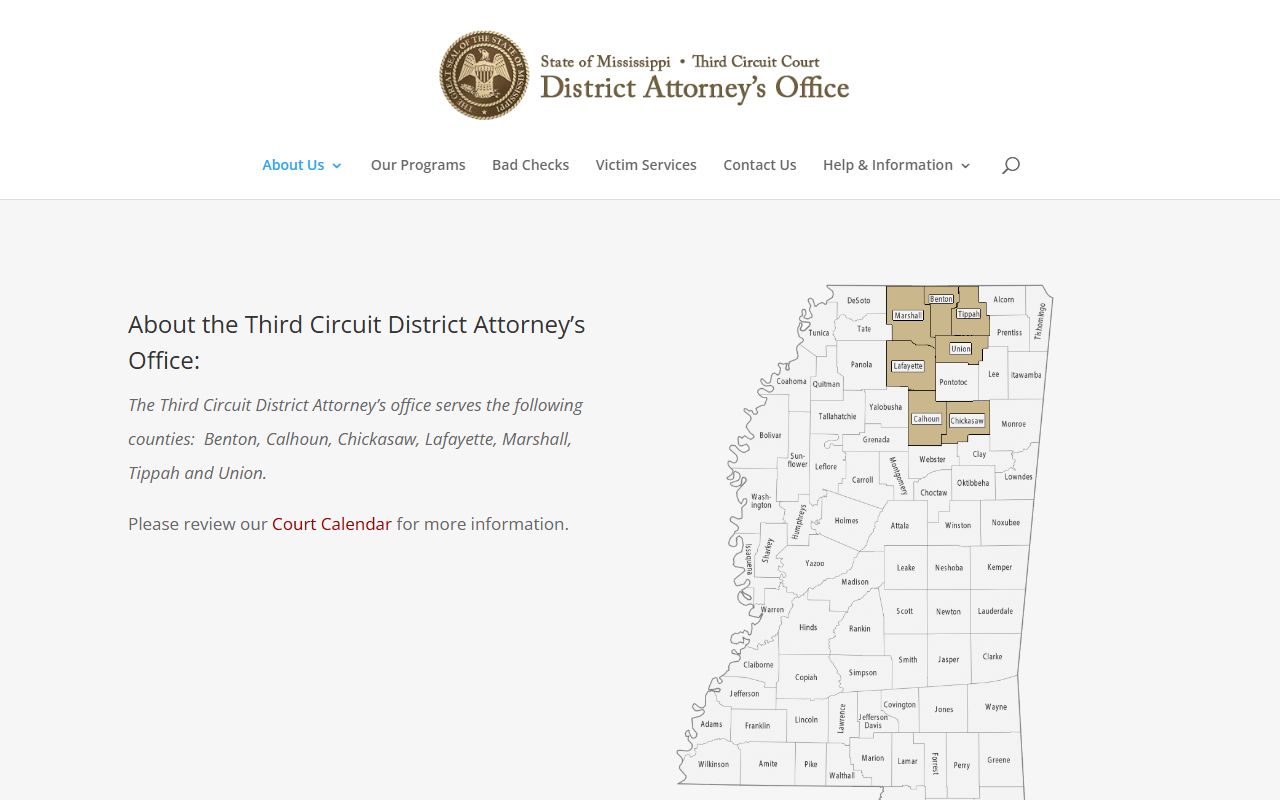
The prosecutor, not the clerk, decides what charges to bring. Benton County sits in the Third Circuit District, and felony cases are prosecuted by the Third Circuit District Attorney's Office. District Attorney Ben Creekmore leads the office, which serves seven counties. The Benton County assignment falls to Assistant District Attorney Erika "Regan" Pritchard, with Jeremey Rainey working as the investigator for Benton and Marshall counties.
The office handles charging decisions, grand jury indictments, plea talks, sentencing recommendations, and victim contact. It does not hand out neutral case records the way a clerk does. The staff directory on the Third Circuit District Attorney site names the prosecutor and investigator tied to local cases.
A look at the prosecutor's office helps explain who drives a criminal case forward. The Third Circuit District Attorney's website describes the district it covers and the attorneys on staff.
Readers who confuse the prosecutor with the records keeper often look in the wrong place. The District Attorney charges and tries the case, while the Circuit Clerk holds and certifies the file. A defendant who cannot afford a lawyer should ask the court at first appearance about appointed counsel, and the Mississippi Office of State Public Defender maintains directory help for finding one.
Charges vs. Convictions
A charge is an accusation. A conviction is a finding of guilt. The two are not the same, and a criminal court record can show charges that were dropped, dismissed, or that ended in acquittal. Reading a file means checking the disposition for each count, not just the charge that opened the case.
| Charge | Conviction | |
|---|---|---|
| Stage | Accusation at filing | Verdict or guilty plea |
| Burden of Proof | Probable cause | Beyond a reasonable doubt |
| Means | Indictment or information | Jury, judge, or plea |
| Public Record | Yes | Yes |
A single case can mix outcomes. One count may end in a guilty plea while another is dismissed in the same file. The full case file, including the final outcome and any sentence, lives in the criminal court record, while the charging detail is tracked in the county court charge records.
Reading Dispositions and Sentences
The disposition is the outcome of a case or a single charge. It is the line most readers look for. Common entries include guilty, not guilty, dismissed, nolle prosequi, and nonadjudication. A no-contest or nolo plea means the defendant accepts the penalty without admitting guilt. Dismissed with prejudice ends the matter for good, while dismissed without prejudice can leave the door open to refile.
- Disposition
- The result of a charge or the case as a whole.
- Nolle Prosequi
- The prosecutor's choice to drop a charge.
- Nonadjudication
- A pause on entering a conviction while the defendant meets set terms.
- Restitution
- Money the court orders a defendant to repay a victim.
A sentence sits below the disposition once a count ends in a conviction or guilty plea. It may set a prison term, probation, a suspended term, fines, court costs, and restitution. The order spells out the length and any conditions. Note: a sentence can blend punishment and supervision, so read the full order rather than the headline term to understand what the court imposed.
Bonds and Warrants in the Case File
Bond and warrant entries thread through a criminal case file. Bond is money or security meant to make sure a defendant returns to court. The record can show the bond amount, the type, and the surety who guaranteed it. A missed court date often triggers a bench warrant or a capias, both of which order law enforcement to bring the person in.
Benton County has no official online warrant list, so a warrant question starts with a phone call rather than a database. The Sheriff's Office, the issuing court, and the Circuit Clerk are the first stops. The full warrant fallback chain, including bench warrants from the lower courts, runs through the sheriff and the issuing court rather than a public portal. The case file itself shows whether a warrant was issued, recalled, or still active when the file was viewed.
Sealed vs. Expunged Records
Sealing and expungement both pull a record out of ordinary public view, but they work differently. A sealed file stays in existence and may still be reached by limited parties. An expunged record is treated as though it never existed for most purposes. Eligibility in Mississippi turns on the offense, the disposition, the waiting period, and the person's prior record.
| Sealed | Expunged | |
|---|---|---|
| Visibility | Hidden from public | Treated as if it never existed |
| Law Enforcement | Limited access | Very limited access |
| Docket Trace | May show little or nothing | Removed from ordinary access |
| Eligibility | By court order | Per Miss. Code § 99-19-71 |
An expungement under Miss. Code Ann. § 99-19-71 follows a set path. Gather the case details first, then file in the court that handled the case. The steps below outline how a Benton County petition typically moves.
- Identify which court handled the case, such as Circuit, Justice, or a municipal court.
- Collect the arrest date, case number, charge, disposition, and proof that all fines and restitution were paid.
- File the petition in the court with authority over the case and serve notice on the prosecutor or arresting agency.
- Attend any hearing so a judge can decide whether the statute's requirements are met.
- If granted, send the order to the clerk, court, prosecutor, and state repositories so the record is removed from public access.
The result is usually removal from ordinary public access and background checks, not the physical destruction of every government file. Some agencies keep limited nonpublic copies where the law allows. The Benton County filing fee for an expungement was not published in official county sources, so contact the Circuit Clerk for the current cost.
Federal Criminal Records Near Benton County
Some crimes are prosecuted in federal court instead of the Circuit Court. Benton County falls within the U.S. District Court for the Northern District of Mississippi, with the nearest courthouse in Oxford. Federal files are not Benton County courthouse records. They live in a separate system run by the federal clerk and the federal prosecutor.
Federal charges in this district are brought by the United States Attorney's Office. Its work parallels the local District Attorney but covers federal crimes. The U.S. Attorney for the Northern District of Mississippi handles federal prosecutions that touch Benton County residents.
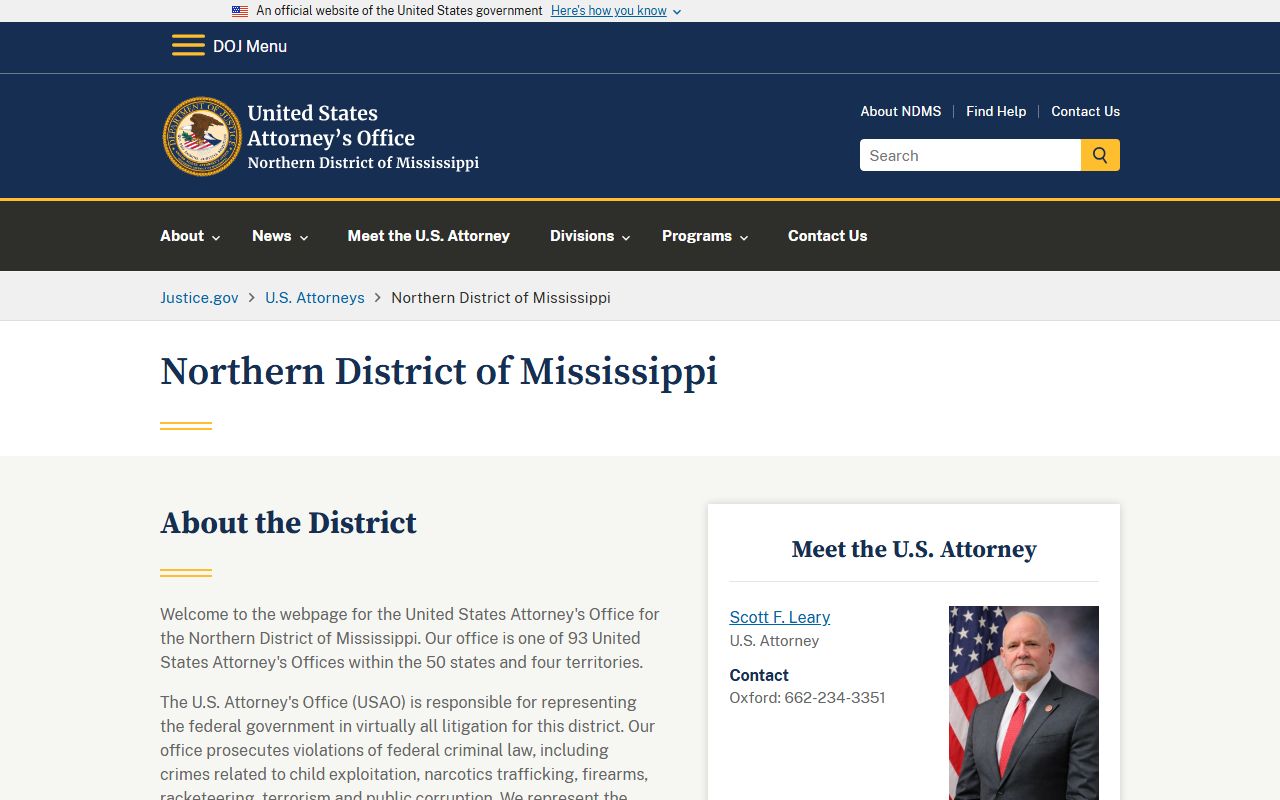
Anyone with a question for that office can reach it directly. The U.S. Attorney contact page lists the Oxford office and its phone line for the public.
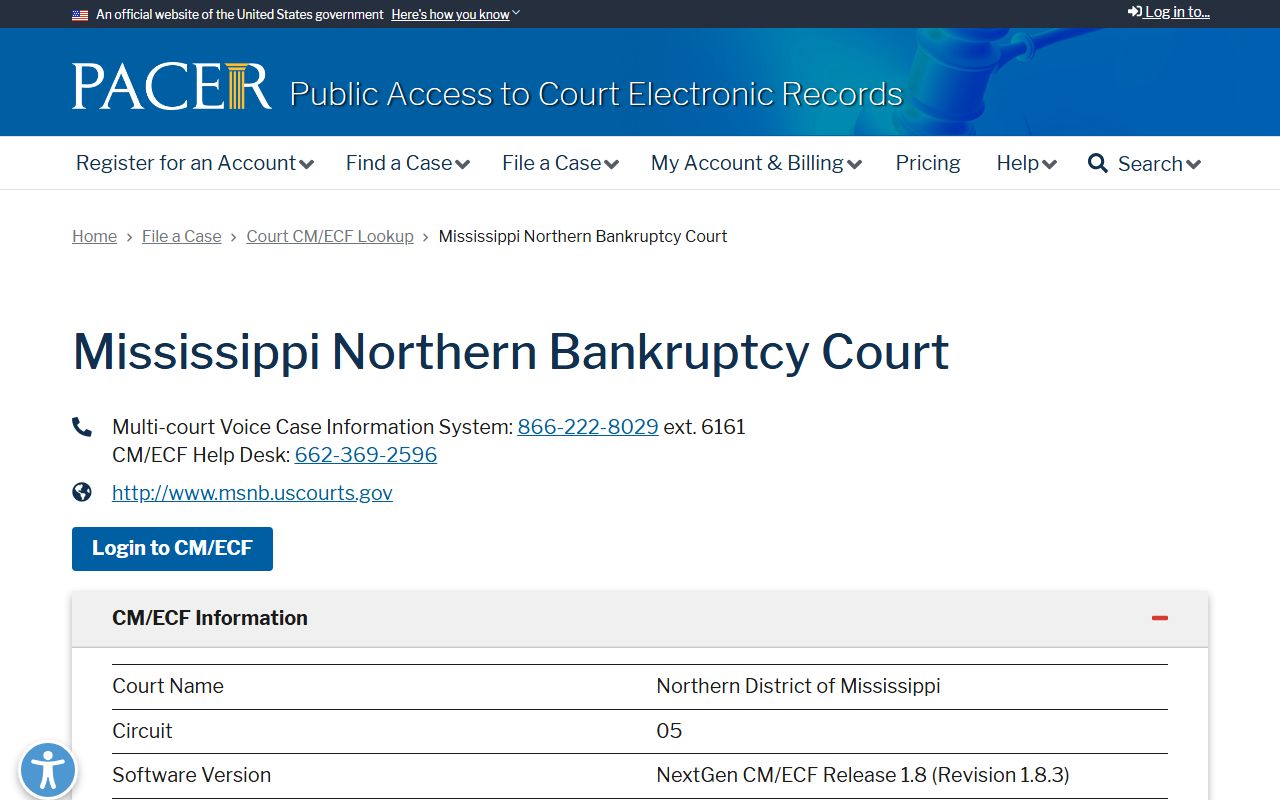
Federal case and docket information is searched through PACER, the official remote-access system for federal courts. A PACER account is needed to view dockets and documents. The court lookup for the district bankruptcy court on PACER shows how the federal index is organized.
Federal convictions can be appealed to a higher court. The appeals lookup tool on PACER points to the circuit that reviews cases from Mississippi.
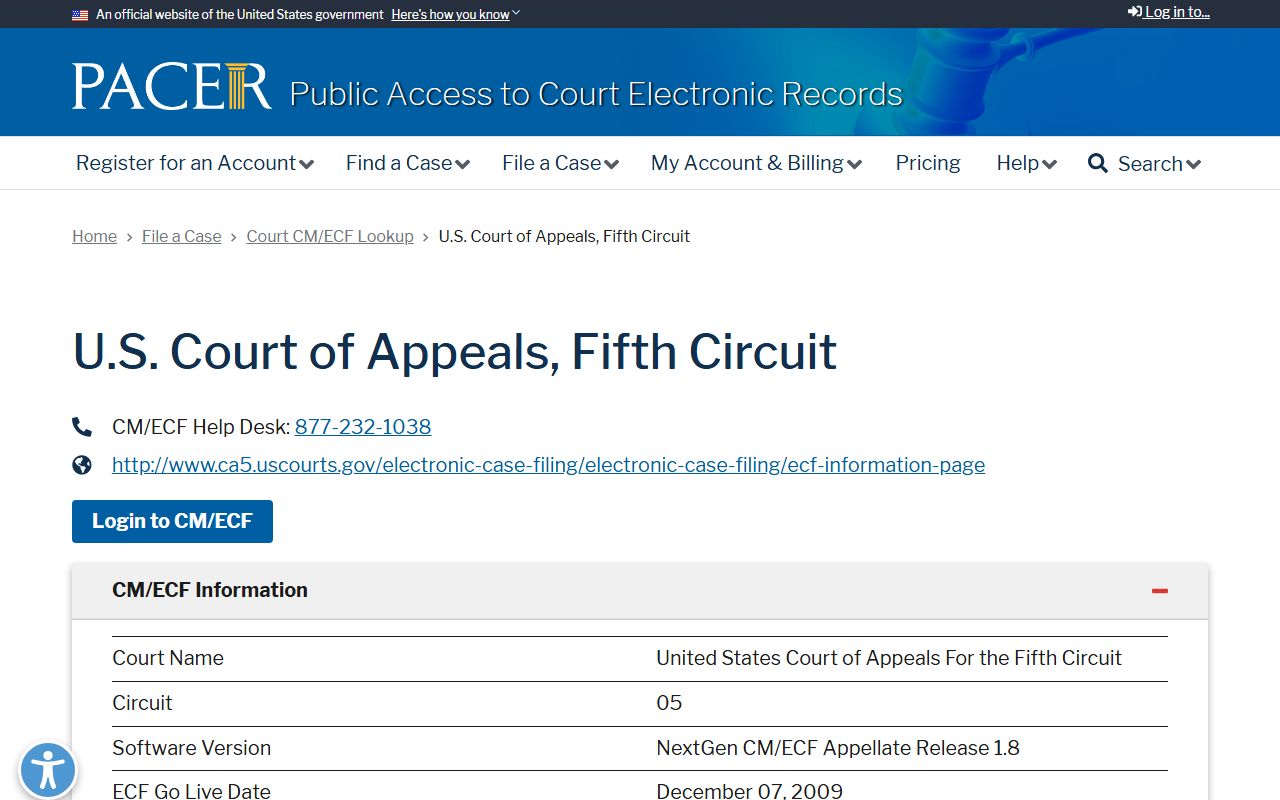
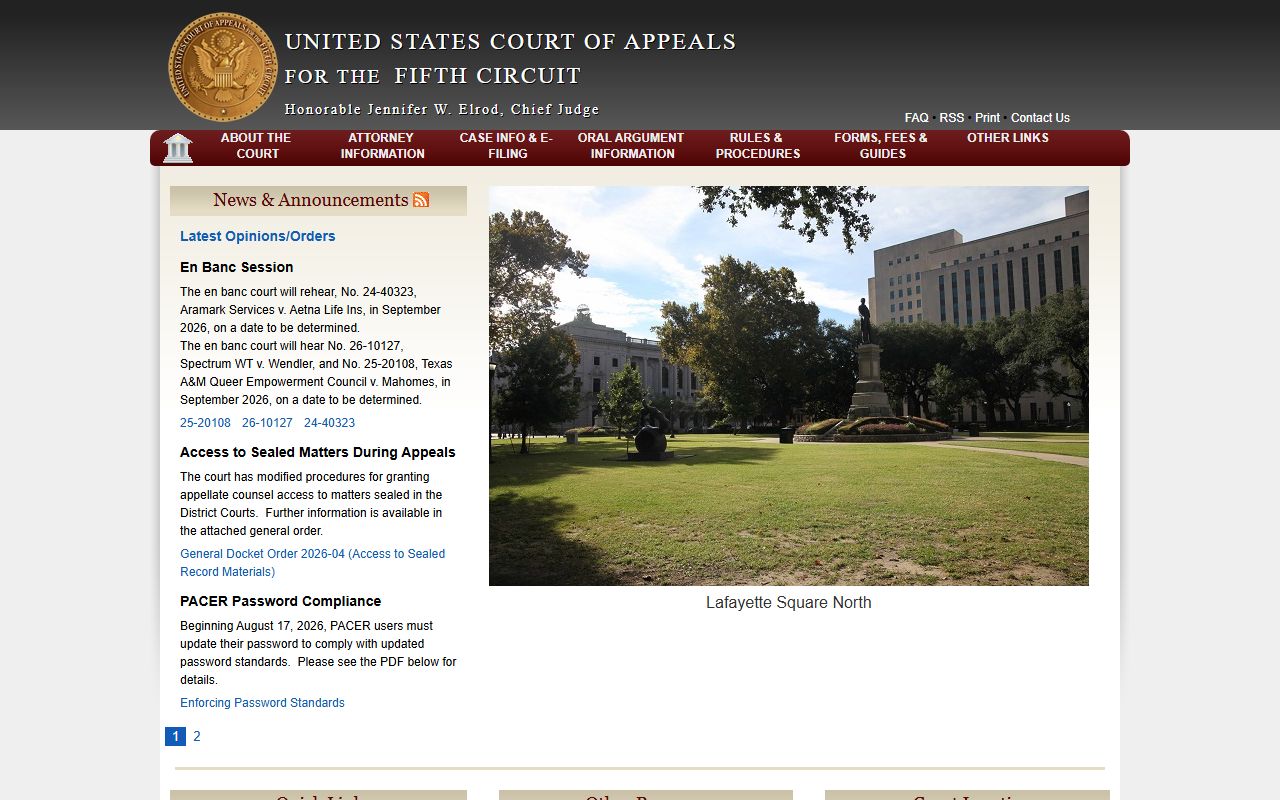
That reviewing court is the Fifth Circuit. The U.S. Court of Appeals for the Fifth Circuit hears federal appeals from Mississippi, including criminal matters from the Northern District.
For most local criminal matters, though, the file stays in Benton County. Federal records matter only when the charge itself is federal. The Northern District of Mississippi homepage explains how its case information is reached.
Public Access to Criminal Court Records
Mississippi law favors public inspection of court records. Criminal case files are open unless a statute, a court rule, or a sealing order says otherwise. The first question is always which office owns the record. For Benton County felonies, that office is the Circuit Clerk. Remote access runs through MEC and PAMEC, while the clerk counter handles older files and certified copies.
Key Statutes:
Miss. Code Ann. Title 25, Chapter 61 - the Mississippi Public Records Act makes public records open for inspection unless a law makes them exempt.
Miss. Code Ann. § 99-19-71 - governs criminal expungement, with eligibility tied to offense type, disposition, and waiting period.
Miss. Code Ann. § 43-21-261 - keeps Youth Court records confidential except through limited statutory access channels.
Background Check Considerations
A casual record lookup is not the same as a formal background check. Reading a public criminal file to satisfy curiosity carries no special rules. Using records to decide on a job, a lease, credit, or insurance falls under the federal Fair Credit Reporting Act, which sets accuracy and notice duties on regulated reporting agencies.
Important: Benton County criminal court records pulled from public portals are not a consumer reporting product under the FCRA, and they may not be used for employment, housing, credit, or other FCRA-regulated decisions.
Restricted Criminal Court Records in Benton County
Not every criminal record is open. Several categories sit outside ordinary public access by law or by court order. Youth Court and juvenile files are confidential, with access limited to the youth, counsel, certain agencies, and the courts. Sealed files stay closed while the seal holds, and the docket may show almost nothing about them.
Expunged records drop out of routine searches once a judge grants the petition. Personal details are also screened from public copies. Social Security numbers, financial account numbers, minor names, medical information, and protected victim data are redacted before release. When a file appears thin or missing, a sealing order or a confidentiality statute is often the reason, and the Circuit Clerk can confirm whether a record exists in a form open to the public.